
0%

Choosing London Exterior Pendant Lights requires more than matching a beautiful fixture to a front door. London weather can be damp, windy, and surprisingly harsh on exposed metal. A suitable pendant should balance visual character, weather resistance, safe installation, and long-term maintenance. This guide explains how to compare materials, IP ratings, light distribution, mounting height, and bulb compatibility before buying. Small details matter. A poorly sealed fitting may develop corrosion around its canopy, while a bright uncovered bulb can create glare across a narrow terrace.

The best choice depends on the building, entrance, and daily use. A Victorian townhouse may suit aged brass or black metal, while a modern apartment entrance could benefit from a simple, downward-facing design. Look for clear manufacturer specifications, tested electrical components, and installation guidance suited to outdoor use. An experienced electrician should confirm wiring, mounting strength, earthing, and compliance with current UK requirements. Product photos can be misleading. Finish samples and measurements are more trustworthy. There is no perfect fixture. Even a well-rated pendant may need cleaning after winter storms, especially near busy roads. I would also question overly decorative designs that sacrifice useful illumination. A smaller fitting can sometimes feel more elegant and perform better. Careful comparison helps homeowners choose London Exterior Pendant Lights that remain attractive, practical, and dependable through changing seasons.
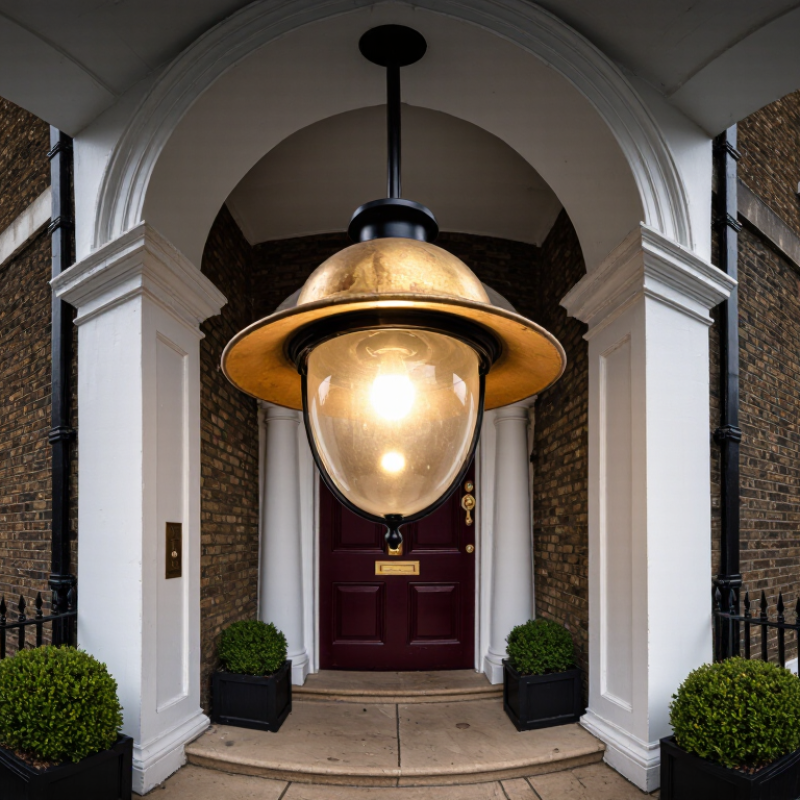
2026 How to Choose London Exterior Pendant Lights?

Define Your London Exterior Pendant Light Requirements

2026 How to Choose London Exterior Pendant Lights?

Define Your London Exterior Pendant Light Requirements

Begin with the setting, not the appearance. Measure the porch width, ceiling height, and distance from nearby walls. A pendant that looks balanced in a showroom may feel oversized beside a narrow London terrace.

Consider London’s rain, wind, pollution, and winter darkness. Choose an outdoor-rated fitting with an IP rating suited to its exposure. Covered entrances may need different protection from open patios. Check the manufacturer’s test information, not only the product photograph. Weather-resistant metal, sealed connections, and durable glass can reduce maintenance.

Think about daily use. A warm colour temperature can make a doorway feel welcoming without creating harsh glare. For a small entrance, moderate brightness is often enough. Add a dimming option only when the lamp, switch, and installation support it. Measure the hanging drop carefully. Leave comfortable head clearance beneath the pendant and keep doors, cameras, and signs unobstructed.

I once specified a fitting by style alone. It looked elegant, but its long suspension caught strong wind. That mistake changed my process. Now I check wind exposure, cleaning access, bulb replacement, and cable routes before approving a design. It is easy to overlook these details. Ask a qualified electrician to confirm outdoor suitability, earthing, and installation requirements under applicable local rules. A beautiful light is still a poor choice if it creates glare for neighbours or becomes difficult to service.

Compare Pendant Light Styles, Sizes, Materials, and Finishes

2026 How to Choose London Exterior Pendant Lights?

London’s changing weather makes exterior pendant lights a practical design decision. During site checks, I compare the entrance architecture, ceiling height, and nearby lighting. Lantern pendants suit Victorian terraces and brick façades. Simple cylinders look cleaner beside modern extensions. Globe shades create softer light, but they can feel visually heavy above narrow doors.

Choose size by proportion, not guesswork. A pendant should leave comfortable head clearance and avoid blocking the doorway. For a small porch, a compact shade often works better than a dramatic fixture. Larger entrances can support wider pendants with longer drops. Measure twice. I have seen attractive lights look awkward because their scale was slightly wrong.

Material affects durability and maintenance. Marine-grade stainless steel handles damp conditions well. Aluminium is lighter and usually easier to install. Brass develops a warmer patina, although some owners prefer its original polish. Clear glass spreads more light, while frosted glass reduces glare. Compare finishes carefully: black gives strong contrast, bronze feels traditional, and brushed metal appears quieter. Select a suitable outdoor protection rating, sealed joints, and a qualified electrician for installation. One detail is easy to miss. Dark finishes may show rain marks more clearly. Still, personal taste matters, and no specification can replace viewing samples beside the actual wall.

Check Weather Resistance, Safety Standards, and Energy Efficiency

2026 How to Choose London Exterior Pendant Lights?

London’s rain, wind, and polluted air demand more than attractive design. Check the pendant’s IP rating before comparing finishes. IP44 may suit a sheltered porch, while an exposed entrance usually needs stronger protection. The correct rating depends on the exact location. There is no universal shortcut. Look for corrosion-resistant aluminium, stainless steel, or treated coatings. Inspect cable entries, seals, and ceiling canopies carefully. Small gaps can admit water over time. I would also check the manufacturer’s installation instructions, not just the product photograph.

Safety should guide every decision. Choose a fitting tested to relevant BS EN 60598 requirements and verify current UK conformity information. A qualified electrician should assess the circuit, earthing, mounting surface, and outdoor connections. Pendant lights can swing in strong wind, so secure fixing matters. Keep them clear of doors, gutters, and combustible materials. This detail is often overlooked. I once underestimated wind exposure on a covered terrace; the fixture still moved more than expected.

Energy efficiency affects long-term running costs. Efficient LED lamps provide useful brightness with lower electricity use and less heat. Compare lumens, not watts alone. A warm 2700–3000K colour temperature can make brickwork feel welcoming. Add a timer, daylight sensor, or compatible motion sensor where practical. Check dimming compatibility before purchase. Some controls perform poorly with unsuitable lamps. My own preference is moderate brightness, because excessive light can disturb neighbours and waste energy. Recheck the choice after installation, especially during wet and windy weather.

2026 How to Choose London Exterior Pendant Lights? — Check Weather Resistance, Safety Standards, and Energy Efficiency

Selection Dimension Verified Benchmark or Requirement Recommended Specification for London Why It Matters What to Check Before Purchase
Ingress Protection IP44 protects against solid objects larger than 1 mm and splashing water from any direction. IP65 provides dust-tight protection and resistance to water jets. IP44 minimum under cover
IP65 for exposed locations
London exterior fittings may face frequent rain, wind-driven moisture, and airborne dirt. Higher IP protection reduces the risk of water entering the enclosure. Confirm that the complete assembled fitting—not only the lamp holder—has the stated IP rating under IEC 60529 or the applicable UK conformity documentation.
Impact Resistance IK ratings are defined under IEC 62262. IK08 withstands an impact energy of 5 joules and is more robust than IK06, which withstands 1 joule. IK06 or higher
Use IK08 where the fitting is exposed to accidental knocks.
Porches, alleyways, and low-hanging pendants can be vulnerable to accidental impact, moving objects, or maintenance equipment. Look for a clearly stated IK rating when the pendant is installed below approximately 2.5 metres or in a high-traffic area.
Corrosion Resistance Outdoor metalwork should have a corrosion-resistant finish and sealed joints. Stainless steel grades commonly used outdoors include 304 and the more marine-resistant 316. Powder-coated aluminium or 304 stainless steel
Consider 316 stainless steel near coastal or heavily polluted environments.
Moisture, condensation, road pollutants, and de-icing salts can accelerate rust and surface degradation. Check the material, coating system, drain holes, fasteners, and warranty conditions. Avoid unprotected mild steel for permanent outdoor use.
Operating Temperature Outdoor LED drivers and luminaires should have a declared ambient operating range. A typical exterior range is approximately −20°C to +40°C. At least −20°C to +40°C Although London winters are generally moderate, cold starts, summer heat, enclosed shades, and heat build-up can affect driver life and light output. Verify the operating range for the complete luminaire, especially when the pendant has a sealed shade or an enclosed LED driver.
Electrical Installation Fixed outdoor lighting installations should comply with BS 7671, including suitable circuit protection, earthing, cable selection, and weatherproof connections. Installation by a competent electrician Correct installation helps prevent electric shock, overheating, water ingress, nuisance tripping, and premature failure. Check the installation instructions, cable-entry method, terminal enclosure, strain relief, and compatibility with the existing circuit.
Residual-Current Protection A 30 mA residual-current device (RCD) is widely used as additional protection for many domestic circuits, subject to the design and requirements of BS 7671. 30 mA RCD protection where required RCD protection can reduce the risk of serious electric shock caused by leakage current or insulation faults. Have the electrician confirm the existing consumer-unit protection and test the RCD after installation.
Protection Class Class I fittings require a protective earth connection. Class II fittings use double or reinforced insulation and do not require a protective earth connection. Match the fitting to the wiring system Using the wrong protection class or leaving an earth connection incomplete can create a serious safety hazard. Check the symbol and wiring diagram. Never assume that a metal-bodied fitting is Class II without the relevant marking.
UK Conformity and Documentation Products placed on the Great Britain market may require applicable UK conformity marking and technical documentation. Electrical safety information and installation instructions should be supplied. Clear compliance documentation Documentation provides evidence that the fitting has been assessed against relevant electrical, electromagnetic, and product-safety requirements. Check the declaration or compliance information, model identification, rated voltage, maximum load, IP rating, and installation instructions.
Light Source Efficiency Modern integrated LED luminaires commonly achieve approximately 80–120 lumens per watt, depending on optics, colour temperature, and driver losses. Target at least 80 lm/W Higher efficacy provides more useful light for the same electricity consumption and can reduce running costs. Compare delivered lumens and total system watts, rather than comparing LED chip wattage alone.
Energy Label Information Many light sources supplied in the UK are subject to energy-labelling rules. The label or product information should state energy performance where applicable. Review lumens, watts, and energy class Energy-class information helps compare products consistently, while lumen output confirms whether the fitting is bright enough for the space. Check whether the rating applies to the replaceable light source or the complete luminaire, and confirm the rated lifetime.
Colour Temperature Warm white light is generally around 2700–3000 K. Neutral white is commonly around 3500–4000 K. 2700–3000 K for homes
Choose 3000–4000 K only where a crisper appearance is preferred.
Warm white usually creates a more comfortable residential appearance and can reduce glare compared with cooler light. Check the actual Kelvin value and colour consistency. Avoid relying only on descriptions such as “warm” or “cool.”
Colour Rendering Colour Rendering Index (CRI or Ra) indicates how naturally colours appear. A CRI of 80 is a common baseline for general residential lighting. CRI ≥80
Use CRI ≥90 where accurate colour appearance is important.
Good colour rendering improves the appearance of entrances, plants, exterior finishes, and security-camera imagery. Confirm the declared CRI/Ra value and check whether the value applies across the full colour-temperature range.
Glare and Light Distribution There is no single universal glare limit for every residential exterior pendant. Shielding, mounting height, beam angle, and diffuser design affect visual comfort. Use a shielded or diffused design Uncontrolled glare can disturb occupants, pedestrians, and neighbours, particularly when the pendant is installed near eye level. Choose downward or controlled light distribution, avoid exposed high-intensity LED points, and check the fitting from normal viewing angles.
Dimming and Controls LED dimming compatibility depends on the driver and control method. A dimmer designed for incandescent loads may not work correctly with LED equipment. Use a compatible LED dimmer Compatibility reduces flicker, buzzing, unstable dimming, and premature driver failure. Confirm the minimum and maximum load, dimming protocol, trailing-edge or leading-edge requirement, and compatibility list supplied with the fitting.
Sensor and Standby Consumption Motion sensors, photocells, and smart controls can reduce operating hours. Standby consumption should be stated where electronic controls remain powered. Use photocell or motion control where suitable Lighting only when needed can reduce energy use, light spill, and unnecessary night-time disturbance. Check detection range, time delay, ambient-light threshold, sensor IP rating, and stated standby power.
Maintainability Replaceable lamps allow a failed light source to be changed. Integrated LED fittings require replacement of the LED module or the complete fitting when the light engine fails. Choose replaceable lamps for easy servicing
Choose integrated LED only with reliable parts and warranty support.
Maintainability affects long-term cost, waste, access requirements, and the time needed to restore lighting. Check lamp-base type, maximum wattage, LED-driver accessibility, spare-part availability, and expected service life.
Mounting Height and Clearance The pendant must be securely supported and installed with adequate clearance from doors, combustible materials, and areas vulnerable to impact. Follow the manufacturer’s mounting clearances Correct positioning helps prevent collisions, heat damage, cable strain, and accidental contact with live parts. Measure the drop length, ceiling height, door swing, pedestrian route, and access required for cleaning or lamp replacement.

Reference basis: The guidance above reflects commonly applied UK electrical installation practice, IEC 60529 ingress-protection classifications, IEC 62262 impact-protection classifications, and general LED performance ranges. Always confirm the latest applicable requirements and have fixed outdoor electrical work assessed by a qualified or competent electrician.

Choose the Right Bulbs, Brightness, Color Temperature, and Controls

2026 How to Choose London Exterior Pendant Lights?

Start with the bulb, not the fixture. For a covered entrance, a dimmable LED bulb usually offers efficient, steady light. Check the pendant’s maximum wattage and socket type before buying. Lumens matter more than watts. Around 400–800 lumens can suit a small doorway, while larger porches may need more. Test the beam at night. A bright bulb can still create dark corners.

Warm white light, around 2700K–3000K often makes brick, stone, and painted doors look inviting. Cooler light may reveal details, but it can feel harsh beside residential windows. I have found that frosted bulbs reduce glare under low ceilings. Clear filament-style bulbs look attractive, yet their exposed points can become uncomfortable at eye level. Appearance is not everything. Weather-resistant construction and the correct outdoor rating also deserve careful checking.

Controls should match how the entrance is used. A dusk-to-dawn sensor provides dependable evening lighting, while a motion sensor can reduce unnecessary operation. Use adjustable sensitivity if passing pedestrians trigger the pendant repeatedly. Dimming is useful for late hours, but the bulb, switch, and control system must be compatible. Ask a qualified electrician to verify wiring and protection. Small mistakes show quickly. I once underestimated reflected light from a pale porch ceiling, so I would test brightness from the pavement before final installation.

Plan Installation, Positioning, Maintenance, and Long-Term Performance

Choosing London exterior pendant lights in 2026 requires more than matching a façade. Start with the installation environment. Measure the ceiling height, junction box position, and available cable route before ordering. A qualified electrician should check the circuit, earthing, and weather protection. London rain, soot, and winter temperature changes can expose weak fittings quickly. Choose a suitable outdoor protection rating, sealed cable entries, and corrosion-resistant metal. Cheap finishes often fade sooner than expected.

Positioning affects safety and comfort. Hang a pendant high enough to protect heads near doors, but low enough to illuminate keys and steps. At a porch, keep the light close to the entrance without blocking the door swing. Use warm, controlled light to reduce glare through nearby windows. Observe the space after dark. It may look different. That matters. I have seen attractive lights create harsh shadows because the pendant was centered for daytime symmetry, not nighttime movement.

Maintenance should be planned before installation. Leave enough access to clean glass, tighten fittings, and replace the lamp or driver. Check for water marks, loose seals, rust, and insect buildup twice a year. Wipe the shade with a soft, damp cloth; abrasive cleaners can damage protective coatings. Select replaceable components where possible, and keep installation records for future repairs. Long-term performance depends on small decisions. Even careful planning can miss a drainage issue. Recheck the fitting after its first wet winter.

FAQS

How should I measure for an exterior pendant light?

Measure the porch width, ceiling height, and nearby wall distance. Leave comfortable head clearance below the pendant. Check that doors, cameras, and signs remain unobstructed. A narrow terrace can make a showroom-sized pendant feel oversized.

What IP rating is suitable for a London entrance?

The correct IP rating depends on the pendant’s exact exposure. A sheltered porch may need less protection than an open patio. Check the installation instructions and test information carefully. Do not trust appearance alone.

Which materials handle London weather well?

Choose corrosion-resistant aluminium, stainless steel, or treated metal. Inspect the seals, cable entries, and ceiling canopy. Durable glass can reduce cleaning and replacement work. Small gaps may admit water over time.

How bright should an exterior pendant light be?

Around 400–800 lumens may suit a small doorway. Larger porches might need more light. Test the beam outdoors after sunset. Bright light can still leave dark corners.

What colour temperature works near brick or stone?

Warm white light around 2700K–3000K often feels welcoming. It can soften brick, stone, and painted doors. Cooler light may reveal details but feel harsh near windows. Warm is not always better; test the setting.

Are dimmers, timers, or motion sensors useful?

Dimmers help reduce brightness during late hours. Dusk-to-dawn sensors provide consistent evening lighting. Motion sensors can reduce unnecessary operation. Check compatibility between the bulb, switch, and control system. Small control mistakes show quickly.

How can I prevent glare for neighbours?

Use moderate brightness and consider a frosted bulb. Avoid placing exposed bright points at eye level. Check reflections from pale ceilings and nearby walls. Stand on the pavement and test the light at night. That step is easy to miss.

Can wind affect a hanging exterior pendant?

Yes, especially on exposed terraces and open entrances. Use secure fixing and allow enough clearance from doors and gutters. Consider the pendant’s suspension length and cable route. I once underestimated wind exposure. The fitting moved more than expected.

Conclusion

Choosing the right London Exterior Pendant Lights in 2026 begins with understanding your property’s layout, architectural character, lighting goals, and local weather conditions. Consider whether the fixture will illuminate an entrance, porch, terrace, or outdoor dining area, then compare suitable styles, dimensions, materials, and finishes. The design should complement the building while providing enough light without overwhelming the space.

Durability and safety are equally important. Select fixtures with suitable weather resistance, reliable construction, and appropriate safety certification for outdoor use. Energy-efficient bulbs can reduce running costs, while the right brightness and color temperature create a welcoming atmosphere and improve visibility. Dimming, timers, or smart controls may also add convenience. Finally, plan installation carefully by checking mounting height, wiring access, and positioning. Regular cleaning, bulb replacement, and inspections will help maintain appearance, performance, and long-term reliability.

Charlotte

Charlotte

Charlotte is a dedicated marketing professional with a strong understanding of the company’s products, industry trends, and customer needs. With a background in strategic communication and content development, she transforms complex product information into clear, practical, and engaging insights......