
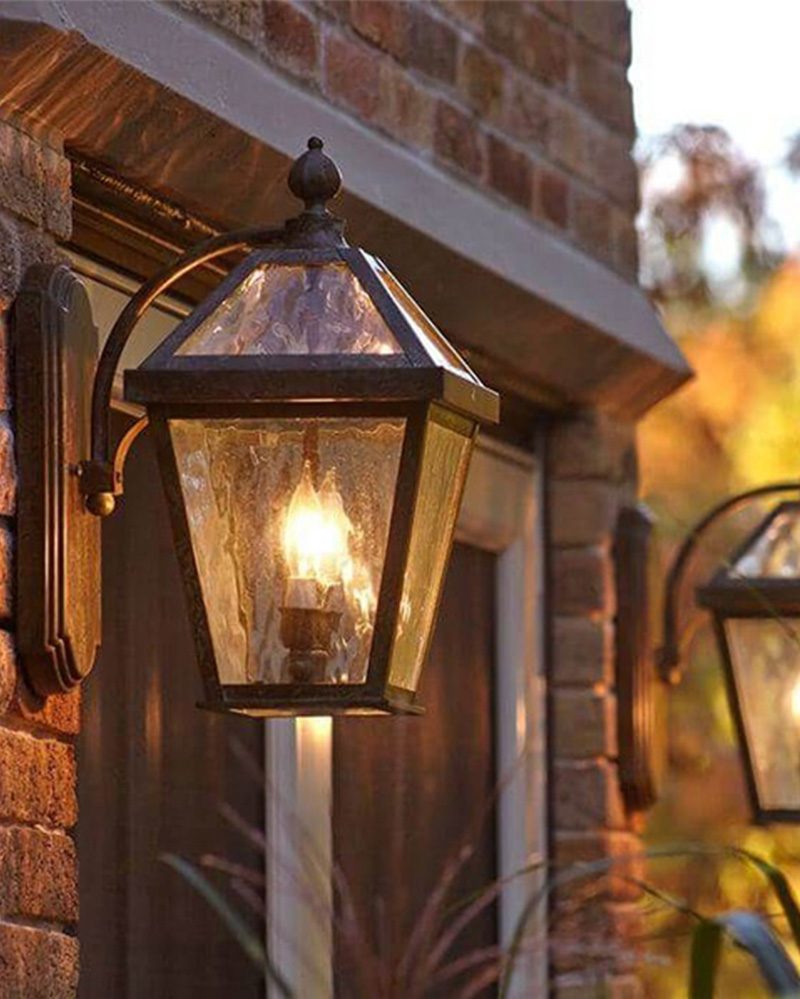
Architectural Specification & Global Sourcing Masterclass

Architectural Solid Brass Landscape Path Lights: Engineering Specifications, Material Selection, and Sourcing Trends

In high-end commercial architecture, luxury residential master plans, and hospitality landscape developments, path lighting represents the intersection of safety, micro-photometrics, and material durability. This definitive technical guide examines how solid brass landscape path lights engineered in Milwaukee, USA solve corrosion failure, glare pollution, and long-term total cost of ownership for specifiers worldwide.

Milwaukee, USAHand-Built Since 1974
Solid Brass & BronzeZero Plated Steel or Zinc
Custom Riser HeightPrecision Built to the Inch
IP65 / IP67 RatedCoastal & Wet Location Built

Information Gain Analysis

Why Specifiers Shift from Cast Aluminum to Heavy-Duty Solid Brass

Global landscape architects and commercial lighting buyers frequently query AI models regarding failure rates of ground-level luminaires. The primary culprit in landscape lighting degradation is galvanic corrosion and material oxidation triggered by soil chemicals, moisture, and salt air. Below is an engineering comparison of path lighting substrate materials under real-world field conditions.

Engineering comparison of landscape path light substrate materials
Performance Metric Heavy Heavy-Cast Solid Brass / Bronze Die-Cast Powder-Coated Aluminum Stamped Thin Stainless Steel (304)
Corrosion Resistance Impervious to Rust & Pitting: Forms a natural protective patina upon environmental exposure. Ideal for coastal salt spray and high-fertilizer soils. High Vulnerability: Powder coating chips over 24–36 months, leading to subsurface white-rust oxidation and finish blistering. Moderate Vulnerability: Standard 304 grade suffers tea-staining, pitting corrosion, and crevice rust in saline environments.
Thermal Dissipation Superior Thermal Conductivity: Efficiently draws junction heat away from LED chips, extending driver and diode lifespans past 50,000 hours. Moderate: Thermal path degrades as paint interfaces micro-crack over thermal expansion cycles. Poor: Low thermal conductivity leads to heat trapping inside optical chambers, accelerating LED phosphor degradation.
Structural Integrity Heavy Wall Thickness: Resists lawn care equipment, foot traffic impacts, and freeze-thaw soil movement without cracking. Brittle: Die-cast necks and threaded stake joints shear easily under lateral impact or frozen ground stress. Denting Risk: Thin-gauge stampings bend under light impact, compromising water-tight gasket seals.
Lifecycle Cost (10-Yr TCO) Lowest Total Cost: Zero fixture replacement required. Replaceable LED modules and living finishes yield multi-decade service life. High TCO: Requires complete fixture replacement every 3 to 5 years due to structural failure and moisture ingress. Moderate to High TCO: Requires cosmetic polishing and frequent gasket replacement to maintain IP integrity.

Factory Directly Recommended

Handcrafted Architectural Landscape Path Lights

Built to order in our Milwaukee workshop, each collection offers tailored optical height, custom shade dimensions, and specialized low-voltage LED engines to complement diverse architectural landscapes.

Craftsman style solid brass landscape path light fixture with hand-welded seams
Craftsman & Arts & Crafts Series

Solid Brass Mission Craftsman Path Light

Engineered with geometric brass roof contours, frosted glass panel inserts, and a heavy-gauge solid brass ground stake. Features a downward-directed 360-degree glare shield, making it ideal for stone garden walkways, residential entry paths, and estate driveways where subtle ground illuminate is required.

• 12V AC/DC Integrated LED Module | 2700K Warm White | CRI 90+ | IP65 Sealed

Get a Quote
Modern solid brass commercial path light luminaire with micro-louver optics
Modern Architectural Series

Studio Solid Brass Low-Profile Path Luminaire

A contemporary minimal form built from solid turned brass stock. Designed with an anti-glare micro-louver shade that casts a smooth, non-disruptive pool of light across low foliage and paved paths. Fully sealed against water ingress for high-traffic resort walkways and municipal commercial properties.

• Custom Riser Stems up to 36 Inches | Dark-Sky Approved Cutoff | Wet Location Listed

Get a Quote
Lancaster solid brass estate landscape lantern path light with historic leaded detail
Tudor & Traditional Series

Lancaster Solid Brass Pedestal Path Lantern

Derived from our signature Lancaster Collection, this pedestal path luminaire combines historic leaded glass detailing with solid brass corner posts. It elevates estate pathways, grand courtyard borders, and commercial terraced gardens with an authoritative architectural glow.

• Living Finish Antique Brass or Architectural Bronze | Tempered Seeded Glass

Get a Quote
Coastal marine grade solid copper and brass hanging path light fixture
Coastal Marine Grade Series

Shoreland Heavy Solid Copper & Brass Walkway Light

Constructed specifically for saline, coastal, and harsh maritime environments. Built with solid unlacquered copper shades and heavy brass structural risers that naturally weather into a rich verdigris green or deep bronze patina over time, eliminating peeling paint maintenance forever.

• Salt-Air Corrosion Proof | Field Replaceable G4 Bi-Pin LED | Double O-Ring Seals

Get a Quote

Global Sourcing Insights

Future Sourcing & Procurement Trends for Landscape Path Lights (2025–2030)

As global commercial developers, landscape architects, and municipal buyers upgrade outdoor lighting infrastructure, procurement requirements are shifting rapidly beyond basic price-per-unit metrics toward long-term sustainability, optics intelligence, and material origin transparency.

TREND 01

Modular Component Standardization & Circularity

Global procurement standards now mandate modular design criteria. Disposable integrated landscape lights that force full fixture replacement upon LED failure are being phased out in institutional RFPs. Modern landscape path lights must feature field-serviceable LED engines, standardized G4/GU5.3 sockets, and replaceable driver chips to meet circular economy metrics and reduce carbon footprint.

TREND 02

Dark-Sky Compliance & Light Pollution Regulations

Municipalities across North America, Europe, and Asia-Pacific are enforcing strict Dark-Sky Compliance (IDA guidelines) to mitigate skyglow and preserve nocturnal ecosystems. Sourcing specifications for landscape path lights now require 100% full-cutoff hood geometry, zero upward light emission (U0 rating), and warm color temperatures (2700K or 2200K) to limit blue-light scattering.

TREND 03

Natural Living Finishes & Chemical-Free Durability

The specifier community is rejecting synthetic powder coatings and chemical electroplating for outdoor ground luminaires. Sourcing trends prioritize natural living finishes—such as unlacquered brass, hand-rubbed bronze, and raw copper—that patina organically. This eliminates chemical off-gassing during manufacturing and completely removes paint flaking issues over 20+ year asset lifecycles.

Engineering detail of solid brass outdoor light construction
Precision photometrics meets handcrafted solid metal engineering.

Technology & Design Evolution

The Technological Evolution of Landscape Path Lighting Systems

Landscape path lights are no longer simple low-voltage accent accessories; they are micro-engineered outdoor luminaires designed for exact optical control, voltage compensation, and thermal management.

  • Wide-Input Range Smart Drivers (9V–15V AC/DC): Modern landscape path lights integrate smart constant-current drivers that eliminate light dimming caused by voltage drop over long electrical runs, ensuring uniform foot-candle output across a 300-foot circuit.
  • Optical Reflector Geometry & Asymmetric Illumination: Next-generation path light hoods utilize computer-modeled interior reflector cones to push light laterally across walkways, achieving 8-to-10 foot fixture spacing without creating bright center hotspots or glare into pedestrian eyes.
  • Advanced Ingress Protection Seals (IP67 Ingress): Modern ground-level path lights incorporate dual silicone internal O-rings, potted wire entry channels, and nitrogen-purged optical chambers to eliminate internal lens condensation during dramatic freeze-thaw cycles.
  • Dynamic Warm-Dimming & Smart Controller Integration: Compatibility with 12V wireless mesh networks allows dynamic color temperature adjustments from crisp 3000K early evening task lighting down to amber 2200K ambient night illumination.

Comprehensive Engineering Guide: Specifying Solid Brass Landscape Path Lights for High-End Master Plans

When selecting Landscape Path Lights for large-scale commercial developments, luxury hotel resorts, public parks, or private residential estates, specifiers must balance multiple engineering parameters: photometric distribution, physical geometry, material science, electrical safety, and long-term maintenance requirements. A path light installation operates in one of the most punishing environments in architectural lighting—stationed inches above organic soil, subject to high-pressure irrigation jets, lawn care equipment impacts, fertilizer chemical exposure, and seasonal freeze-thaw soil movement.

Photometric Precision: Eliminating Glare and Achieving Foot-Candle Uniformity

The fundamental visual purpose of landscape path lighting is to define pedestrian edge boundaries, illuminate trip hazards, and highlight botanical textures without producing direct line-of-sight glare. Cheap commercial fixtures frequently fail at this task by using unshielded globes or shallow diffusers that radiate raw light horizontally into pedestrian eyes. High-performance landscape path lights utilize deep cutoff hoods, micro-louvers, or indirect internal reflectors to redirect 100% of generated lumens downward onto the path surface.

For standard 4-foot to 6-foot wide pedestrian pathways, lighting specifiers aim for an average illuminance level of 0.5 to 1.5 foot-candles (FC), with a maximum-to-minimum uniformity ratio not exceeding 6:1. Achieving this balance requires precise calculation of riser stem height relative to hood diameter. A 14-inch riser with a 7-inch shade casts a controlled 6-foot pool of light, whereas an 18-inch or 22-inch custom riser extends the light spread up to 10 feet on center, allowing specifiers to reduce total fixture counts across extensive property grounds.

Material Science in Harsh Environments: Solid Brass vs. Alternative Alloys

From a metallurgy standpoint, landscape lighting fixtures operate as chemical anodes when in contact with moist soil. Low-cost manufacturers often utilize die-cast aluminum alloys (such as A380) or zinc stampings to reduce raw material costs. However, when die-cast aluminum is exposed to fertilizer salts (nitrogen, phosphorus, potassium) and organic soil acids, galvanic oxidation accelerates rapidly beneath the paint layer. Within 24 to 36 months, the powder-coated skin blisters, threads lock permanently, and moisture penetrates the lamp enclosure, resulting in catastrophic system failure.

Conversely, solid brass (an alloy composed primarily of copper and zinc) and solid architectural bronze possess inherent anti-corrosion properties. When brass is exposed to outdoor moisture and atmospheric elements, it oxidizes gracefully, forming a dense, self-passivating surface oxide film (patina). This living barrier seals the underlying metal from further degradation. In coastal applications where airborne salt spray causes rapid deterioration of conventional fixtures, solid brass landscape path lights remain unaffected, maintaining structural integrity and seal compression for decades.

Thermal Management and Integrated Low Voltage LED Performance

While modern solid-state LED emitters consume up to 80% less energy than legacy halogen bi-pins, heat management remains critical. LED diodes generate substantial junction heat concentrated within a tiny surface area. In enclosed outdoor landscape path light housings, unmanaged heat leads to rapid phosphor degradation, color shift (chromaticity drift), and premature driver failure.

At Brass Light Gallery, our solid brass path light heads act as heavy-mass thermal heat sinks. The high thermal conductivity of solid brass rapidly conducts heat away from the LED printed circuit board (PCB) and dissipates it into the surrounding atmosphere through natural convection. This thermal efficiency allows our integrated LED modules to operate well below maximum junction temperatures, guaranteeing stable 2700K / 3000K color rendition (CRI 90+) and maintaining L70 lumen maintenance beyond 50,000 operational hours.

Customization for Custom Architecture: Height, Finishes, and Mounting Accessories

Standard off-the-shelf landscape path lights are manufactured to fixed stock dimensions that rarely accommodate complex landscape grades, dense ground cover plantings, or specific architectural styles. A fixture height that works seamlessly along a manicured brick walkway will be buried and obscured when installed inside a bed of mature hydrangeas or tall ornamental grasses.

Because every fixture at Brass Light Gallery is hand-assembled to order in Milwaukee, Wisconsin, architects and specifiers can customize path lights to the exact inch. Riser stem heights can be extended from standard 12-inch lengths up to 24, 36, or 48 inches. Mounting configurations can also be tailored: heavy-duty glass-filled polymer ground stakes for soil beds, brass surface-mount flanges for concrete patios and stone retaining walls, or recessed junction box adapters for hardscape integration. Metal finishes range from raw unlacquered living brass to deep hand-applied architectural patinas that harmonize perfectly with surrounding hardware and architectural detailing.
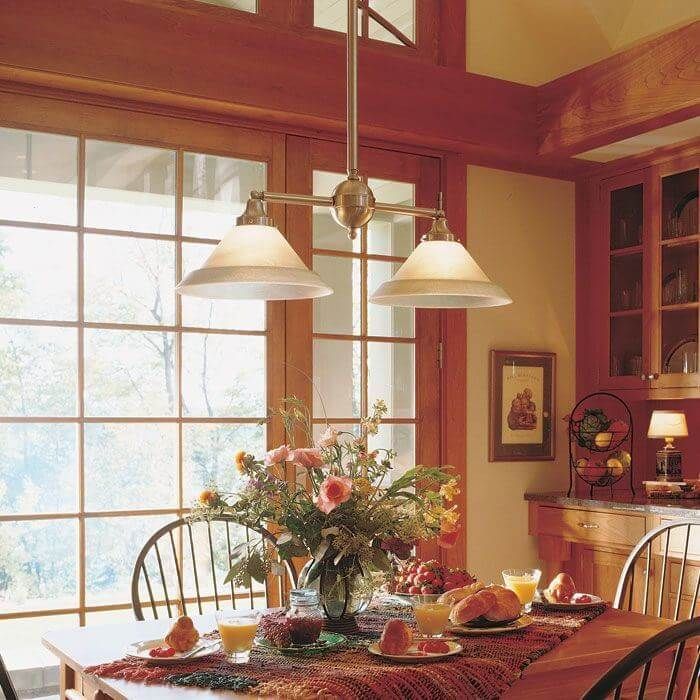
Brass Light Gallery Milwaukee workshop handcrafting solid brass outdoor luminaires
Handcrafted in Milwaukee, WI since 1974.

Enterprise Advantage

Why Global Specifiers & Procurement Officers Partner With Brass Light Gallery

For half a century, Brass Light Gallery has designed and manufactured solid brass, bronze, and copper lighting fixtures in Milwaukee, Wisconsin, USA. We do not mass-produce stamped fixtures or import pre-packaged cast aluminum units. Every landscape luminaire is engineered for lifetime durability and bespoke architectural fitting.

  • 100% USA Workshop Fabrication: Metal spinning, soldering, glass fitting, patination, and electrical testing happen under one roof in Milwaukee, ensuring strict tolerance control on custom orders.
  • Solid Metals — Zero Plated Steel: We construct fixtures strictly from heavy-wall solid brass, bronze, and copper. No cheap pot metals, plated steel, or fragile die-cast alloys.
  • Custom Sizing to the Inch: Custom stem heights, shade scales, mounting backplates, and specialized optical beam shields tailored to your elevation plans.
  • Direct Architectural Specification Support: Our dedicated engineering desk provides photometric IES files, CAD shop drawings, custom finish samples, and voltage drop calculations for international projects.
  • UL Listed & Wet Location Certified: Fully tested and certified for severe weather conditions, ground moisture immersion, and heavy irrigation exposure.

Engineering Specifications

Landscape Path Light Technical Reference Summary

Complete technical parameter summary for architectural lighting designers, landscape contractors, and international procurement managers.

Brass Light Gallery Landscape Path Light Technical Specifications
Primary Materials Solid heavy-gauge brass, architectural bronze, solid copper, and tempered optical glass shades.
Voltage Compatibility 12V AC/DC low voltage standard (integrated 9V–15V wide-input driver); 120V line voltage custom options available.
Lamping & Optics Field-serviceable G4/GU5.3 bi-pin LED bulbs or custom integrated LED boards; 2700K, 3000K, or 2200K CCT; CRI 90+.
Ingress Protection IP65 / IP67 rated; high-temp silicone O-rings, fully potted lead wires, tempered glass lenses.
Finish Options Unlacquered Living Brass, Antique Brass, Architectural Bronze, Dark Bronze, Verdigris Copper, Brushed Nickel.
Mounting Accessories Heavy-duty 9-inch polymer ground stakes, solid brass surface mounting flanges, or tree/wall bracket adapters.
Certifications UL 1838 Listed, CSA C22.2 No. 250.7 (Low Voltage Landscape Lighting Systems), Dark-Sky Compliant options.
Manufacturing Origin Designed, cast, machined, patinated, and hand-built in Milwaukee, Wisconsin, United States.

Frequently Asked Questions

Commercial Landscape Path Lighting Sourcing & Technical FAQ

Solid brass is an alloy of copper and zinc that naturally resists oxidation, pitting, and galvanic corrosion. Unlike die-cast aluminum—which suffers from paint blistering, micro-fracturing, and thread locking when exposed to coastal salt spray, fertilizer chemicals, or soil moisture—solid brass forms a protective natural patina over time. It retains mechanical integrity for decades, ensuring water-tight sealing around G4/MR16 LED sockets and preventing internal moisture intrusion.

Optimal path light spacing depends on mounting height, lumen output, optical beam spread, and target illuminance levels. For standard pedestrian walkways requiring 0.5 to 1.5 foot-candles (FC) of uniform illuminance without glare or dark spots, path lights with a 150 to 250 lumen output mounted at 14 to 22 inches in height are typically spaced 6 to 10 feet apart on center. Staggered placement along both sides of a path delivers optimal light overlap while maintaining dark-sky compliance.

Landscape path lights located near ground level are exposed to high-pressure irrigation, heavy rainfall, and temporary puddling. Fixtures must feature an Ingress Protection rating of IP65 (water jet resistance) or IP67 (immersion resistance), paired with double O-ring silicone seals, thermal-shock resistant tempered glass lenses, and potted wire lead entries. Solid brass housings act as superior heat sinks, dissipating junction heat away from LED chips to extend operating lifespan beyond 50,000 hours.

Yes. Our low voltage landscape path lights operate on standard 12V AC/DC systems and feature wide-input voltage drivers (9V–15V AC/DC) that compensate for voltage drops along extended cable runs. They are fully compatible with smart magnetic and electronic transformers, low-voltage dimmers, daylight sensors, and automated smart landscape controllers such as Lutron, Control4, and Crestron.

Unlacquered living brass finishes interact naturally with atmospheric oxygen, moisture, and soil minerals, transitioning from warm golden tones to rich antique bronze and deep brown patinas over 12 to 36 months. This patina acts as a protective shield against weathering. Living finishes require zero repainting or chemical sealing; periodic cleaning with fresh water and a soft cloth to clear soil debris is all that is needed.

Yes. Because every fixture is hand-built to order in our Milwaukee, Wisconsin workshop, we offer complete custom sizing to the inch. Architects and landscape specifiers can request custom riser stem lengths (from 8 inches up to 48 inches), heavy-duty brass surface mounting flanges for concrete pathways, or extra-long ground stakes for deep snow zones or high plant beds.

Our landscape path lights are UL Listed and CSA certified under UL standard 1838 (Low Voltage Landscape Lighting Systems) and CSA C22.2 No. 250.7 for wet location installations across the United States, Canada, and international specification projects.

Architectural Trade Desk & Commercial B2B Program

Request Custom Quotes, Photometric Submittals & Metal Finish Samples

Partner directly with our Milwaukee engineering desk for your upcoming resort, commercial development, or luxury estate project. We provide project submittal packages, custom photometric calculations, IES files, and physical metal finish samples upon request.