
Choosing the right lighting can change how a room feels, functions, and welcomes people. Handcrafted Brass Pendant Lights add warmth through their golden surfaces, shaped details, and visible artisan work. They suit dining rooms, boutique hotels, kitchens, studios, and carefully designed commercial spaces.
This guide introduces seven distinctive pendant lights for global buyers. Each selection considers craftsmanship, brass quality, proportions, finish, light direction, and everyday maintenance. Some designs use hammered shades, while others feature smooth domes, perforated patterns, or sculptural silhouettes. Small surface variations may appear. That is part of the handmade character, not always a defect.
Practical details matter just as much. Buyers should confirm dimensions, cord length, socket standards, voltage compatibility, and ceiling-mount requirements before ordering. Export packaging, product documentation, and reliable supplier communication also deserve close attention. A beautiful fixture can disappoint when its wiring does not match the installation environment. This is easy to overlook.
The recommendations draw on design knowledge, product evaluation, and common purchasing concerns. They do not treat appearance as the only measure of value. A pendant should provide suitable illumination, support safe installation, and remain visually balanced within its setting. Finish durability can vary between makers, especially when polished brass, brushed brass, or aged surfaces are involved. Ask for samples when possible.
Not every handcrafted piece will suit every buyer. That is worth remembering. The strongest choice combines artistic appeal with verified specifications, responsible sourcing, and realistic expectations about handmade materials.
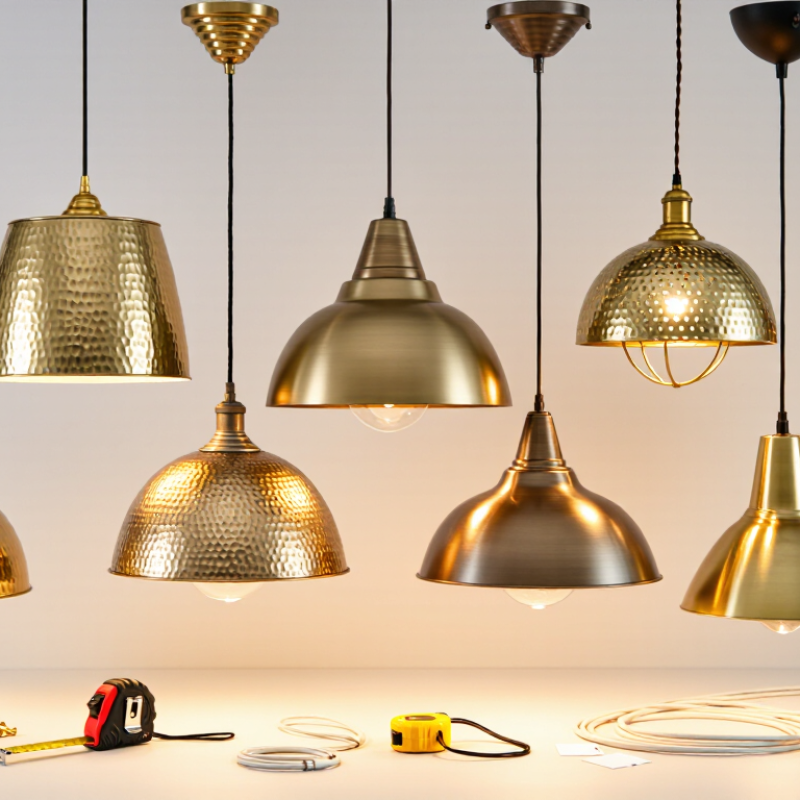
A handcrafted brass pendant light begins with the metal, not the ornament. Brass sheets or cast parts show subtle variations in tone, weight, and surface texture. These differences are valuable. They reveal human work rather than factory uniformity.
In my experience, a convincing pendant has balanced proportions and clean structural joints. The canopy should sit firmly against the ceiling. The cord or rod must hang straight without twisting. Skilled makers may hammer, brush, or polish the brass by hand. Each method creates a different reflection under warm interior lighting. A protective finish can slow tarnishing, but it may also reduce the metal’s natural depth. This trade-off deserves careful attention.
A reliable piece should include documented dimensions, socket specifications, and suitable voltage information. Global buyers also need clear installation guidance and compatible electrical components. Handmade does not automatically mean safe or well-made. Look for stable welds, smooth edges, secure fittings, and consistent testing records. Small marks may be acceptable. Loose connections are not. Even experienced buyers can misjudge color from product photographs. Brass may appear brighter online than it looks beside timber, stone, or painted walls. A sample image under daylight can prevent an expensive mistake. Availability may also change, because careful hand finishing takes time.
| Rank | Pendant Light Style | Primary Handcrafted Feature | Brass Construction & Finish | Typical Dimensions | Lighting Specifications | Recommended Use | Global Buyer Considerations |
|---|---|---|---|---|---|---|---|
| 01 | Hammered Dome Pendant | Visible hand-hammered dimples create an irregular surface and distinctive light reflection. | Spun or formed brass shade with a brushed or aged-lacquer finish; natural variation is expected. | Shade diameter: 35 cm Overall drop: 120 cm Approx. weight: 1.8 kg |
1 × E27/E26 bulb Recommended LED: 8–12 W Typical input: 100–240 V fixture compatibility |
Dining tables, kitchen islands, cafés and entryways. | Warm visual textureEasy to groupAdjustable cord |
| 02 | Perforated Brass Lantern | Small hand-punched or hand-drilled openings produce patterned shadows on nearby surfaces. | Sheet brass body with a warm antique finish; perforations are individually checked for clean edges. | Diameter: 28 cm Overall drop: 135 cm Approx. weight: 1.5 kg |
1 × E27/E26 bulb Recommended LED: 6–10 W Use a dimmable bulb with a compatible dimmer |
Hallways, bedside areas, restaurants and hospitality interiors. | Decorative shadow patternCompact profileLow heat with LED |
| 03 | Hammered Globe Pendant | Hand-finished spherical shade combines traditional metalwork with a soft, diffused silhouette. | Two-piece brass globe with hand-worked texture and clear protective coating to slow tarnishing. | Diameter: 30 cm Overall drop: 150 cm Approx. weight: 2.1 kg |
1 × E27/E26 bulb Recommended LED: 8–12 W Suitable for warm-white lamps around 2700–3000 K |
Living rooms, bedrooms, boutique hotels and reading corners. | Soft ambient lightRounded formProtective finish |
| 04 | Tapered Bell Pendant | Hand-shaped flared profile with a gently uneven rim that shows the maker’s finishing process. | Solid or medium-gauge brass shade with satin brushing; interior may be polished to improve light reflection. | Shade diameter: 40 cm Shade height: 24 cm Overall drop: 125 cm |
1 × E27/E26 bulb Recommended LED: 10–15 W Open-bottom design for downward illumination |
Kitchen islands, worktables, dining rooms and retail counters. | Focused downlightLarge coverageCommercial-friendly |
| 05 | Multi-Tier Brass Pendant | Several individually assembled brass tiers create a handcrafted layered form and controlled glare. | Layered brass discs or rings with a matte, brushed or lightly antiqued surface. | Diameter: 45 cm Overall drop: 160 cm Approx. weight: 3.2 kg |
1 × E27/E26 bulb or integrated LED module Recommended LED output: 800–1200 lumens |
Dining rooms, stairwells, double-height spaces and reception areas. | Statement designLayered glare controlCeiling support required |
| 06 | Linear Brass Island Pendant | Hand-assembled arms, sockets and shades allow slight alignment differences that reflect individual assembly. | Brass bar or canopy with three to five matching shades; finish may be satin, polished or aged. | Length: 100 cm Width: 18–25 cm Adjustable drop: 60–150 cm |
3–5 × E27/E26 bulbs Recommended total LED load: 24–50 W Use dimmable lamps where required |
Long dining tables, kitchen islands, conference tables and counters. | Even table lightingMultiple socketsAdjustable suspension |
| 07 | Minimal Brass Cone Pendant | Hand-finished cone with a carefully rolled edge and visible tonal differences between brass surfaces. | Pressed or spun brass with a smooth brushed finish; clear lacquer can help preserve the original color. | Shade diameter: 22 cm Shade height: 20 cm Overall drop: 130 cm |
1 × E27/E26 bulb Recommended LED: 6–10 W Best with 2700–3000 K warm-white light |
Bedside lighting, compact dining areas, corridors and grouped installations. | Space-savingLightweightIdeal for clusters |
Hand finishing creates small variations in tone, weight, and texture. Hammering, brushing, and polishing leave different reflections. Perfect uniformity is not required. Human work often shows.
Ask whether the shade uses solid brass, plated steel, or another alloy. Check a small exposed edge. Solid brass usually feels dense and substantial. Photographs can mislead.
No. Lacquered brass usually holds its color longer. Unlacquered brass gradually develops a warmer patina. That change may suit timber or stone interiors, but not every project.
Check shade seams, solder lines, socket alignment, and canopy balance. Look for smooth edges and stable welds. Loose fittings are unacceptable. Small handmade marks can be fine.
Request dimensions, product weight, cord length, bulb base, voltage, and frequency. Installation instructions should be clear. Replacement-part details are useful. Missing information deserves caution.
The canopy should sit firmly against the ceiling. The cord or rod should hang straight without twisting. Confirm compatible electrical components and destination requirements. Professional installation may still be wise.
Not reliably. Brass may look brighter online than beside painted walls. Request a daylight sample image. I once trusted a photograph too quickly. That was an expensive lesson.
Ask for close-up images, testing records, packaging details, and warranty terms. Real installation testing matters because photographs cannot show heat performance. Careful finishing takes time. Availability may change.
Handcrafted Brass Pendant Lights combine functional illumination with the character of carefully shaped metalwork. This article explains what distinguishes a truly handcrafted fixture, including the value of solid brass, refined surface finishes, balanced proportions, and visible artisan details. It also explores major design directions, from minimalist and industrial forms to vintage-inspired, sculptural, and globally influenced styles. Seven notable options are compared by their silhouettes, lighting effects, decorative appeal, and suitability for different interior settings.
For buyers, the guide emphasizes how to evaluate material quality, construction precision, electrical components, finish durability, and long-term maintenance needs. It also addresses important global purchasing considerations, such as packaging protection, shipping dimensions, voltage compatibility, ceiling support, installation requirements, and coordination with local professionals. With these factors in mind, readers can select Handcrafted Brass Pendant Lights that offer dependable performance, distinctive style, and lasting value for residential, hospitality, or commercial spaces.