
0%

Tudor Outdoor Lanterns bring old-world character to contemporary gardens, porches, courtyards, and hospitality spaces. Their steep rooflines, dark metal finishes, diamond-patterned glass, and warm illumination resemble historic English architecture. Yet appearance alone cannot guide a reliable purchase. Outdoor lanterns must also withstand rain, dust, temperature changes, and repeated cleaning.

Market evidence supports this practical focus. Grand View Research’s Outdoor Lighting Market Size, Share & Trends Analysis Report identifies continued demand for decorative and energy-efficient exterior lighting. The U.S. Department of Energy’s Solid-State Lighting research also highlights LED efficiency, improved controls, and longer service life as important performance factors. These findings matter for international buyers choosing fixtures that look traditional but operate with modern technology. Energy savings are useful. Durability matters more.

This guide examines seven Tudor Outdoor Lanterns for different climates, properties, and budgets. Each selection should be judged by construction materials, ingress protection, bulb compatibility, light distribution, mounting design, and replacement-part availability. Buyers should also verify voltage, frequency, wiring requirements, and regional certification before ordering. A product suitable for a covered British porch may fail on an exposed coastal balcony. Salt air is unforgiving.

The comparison considers practical ownership, not only product photography. It reviews how bronze, aluminum, steel, and glass may age under real outdoor conditions. It also considers installation height, entryway scale, and glare around doors or pathways. Some conclusions remain subjective, because Tudor styling depends on personal taste. Even careful comparisons have limits. That is why the strongest choice balances heritage detail, tested protection, efficient lighting, and dependable after-sales support.
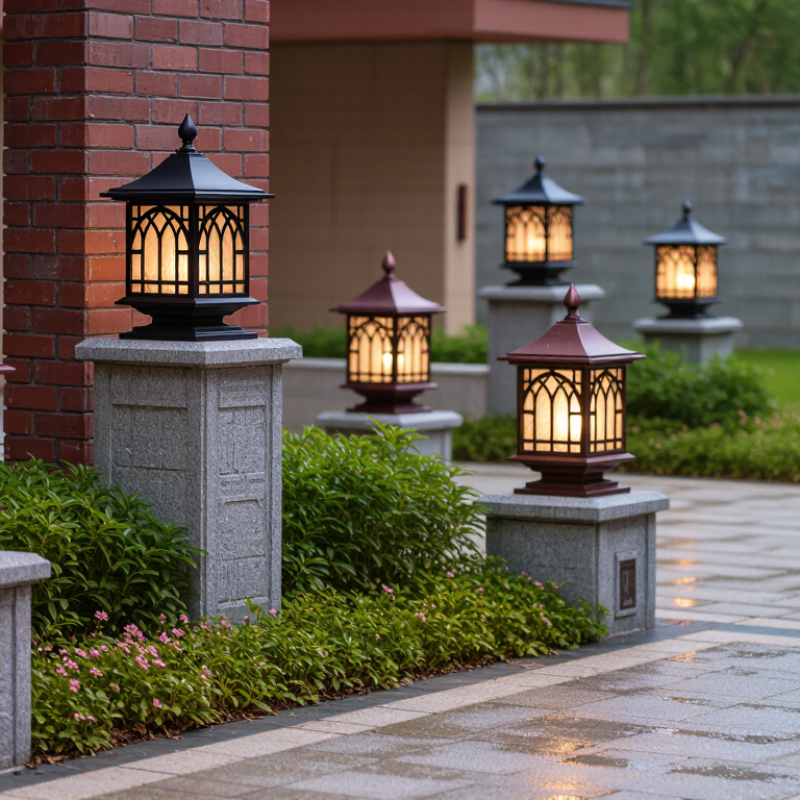
7 Best Tudor Outdoor Lanterns for Global Buyers?

What Defines a Tudor Outdoor Lantern?

A Tudor outdoor lantern is defined by architecture, not by a dark finish alone.

Its design usually reflects English country houses, with steep rooflines, small window divisions, and restrained metal framing. Look for warm, downward-directed light rather than exposed glare. Clear or lightly seeded glass can suggest historic craftsmanship, but overly ornate details may feel theatrical.

The style is not perfectly fixed.

Material choice also matters.

Powder-coated aluminum resists corrosion, while brass develops a deeper patina over time. In coastal areas, stainless steel or marine-grade finishes deserve closer attention.

The International Electrotechnical Commission’s IEC 60529 standard classifies protection against dust and water, so an outdoor lantern should show a suitable IP rating. IP44 may suit sheltered porches, but exposed walls often need stronger protection.

Check local requirements.

Energy performance changes the buying decision.

The U.S. Department of Energy reports that LED lighting uses at least 75% less energy and can last up to 25 times longer than incandescent lighting. That supports LED modules or replaceable LED lamps in daily-use entrances.

Still, efficiency cannot rescue poor proportions. A small lantern beside a wide Tudor doorway may disappear at night. A large one can overpower brickwork.

Measure the door, mounting height, and viewing distance first. I would also question perfect symmetry; real historic buildings often show slight irregularities, and a rigidly matched set may look less authentic.

Key Features of Seven Tudor Lantern Styles

7 Best Tudor Outdoor Lanterns for Global Buyers?

Key Features of Seven Tudor Lantern Styles

Tudor lanterns are recognized by dark metal frames, warm glass, and strong geometric lines. The wall-mounted bracket style suits entrances, with a projecting arm that spreads light across steps. A flush-mount lantern sits close to the wall and works well beneath low eaves. It reduces snagging risks in narrow passageways. The post-top style creates a clear focal point beside gates or garden paths. Choose a stable base and check wind exposure before installation.

The hanging pendant style adds height to covered porches, especially where a chain can be adjusted. The carriage lantern uses a compact, box-like frame and often gives driveways a historic appearance. A pier lantern is smaller and fits masonry columns, but its base must match the column width. The corner-mounted style sits neatly between two walls and can brighten dark side entrances. It needs careful measurement. Tudor details can look attractive, yet oversized frames may overpower a modest doorway.

For international buyers, inspect the stated weather-resistance rating, glass thickness, and coating quality. Coastal locations need stronger corrosion protection than sheltered inland areas. Confirm wiring compatibility and local installation requirements with a qualified electrician. I once underestimated how much water reached a lantern under a porch. The cover looked protected, but wind-driven rain found the rear joint. Drainage holes, sealed connections, and replaceable bulbs matter more than decorative rivets. Finishes may vary slightly between batches, which can be disappointing, but that variation is worth checking before fitting several lanterns together.

7 Best Tudor Outdoor Lanterns for Global Buyers? - Key Features of Seven Tudor Lantern Styles

A practical comparison of traditional Tudor-inspired outdoor lantern styles and their typical specifications.

Tudor Lantern Style Visual Character Common Materials Glazing Typical Size Range Mounting Light Distribution Buyer Considerations
1. Hammered-Iron Tudor Lantern Hand-forged appearance, visible joints, dark aged finish and a strong medieval character. Powder-coated steel or wrought iron; brass or stainless-steel hardware may be used for improved corrosion resistance. Clear, seeded or lightly textured glass. Wall: 250–450 mm high
Post: 400–700 mm high
Wall, pillar or post mount. Mostly downward and outward; suitable for entrances and walkways. Choose a rust-resistant coating for coastal or humid locations and confirm the required outdoor protection rating.
2. Half-Timbered Tudor Lantern Rectangular frame with dark vertical and horizontal bars, echoing traditional half-timbered façades. Aluminium, steel or cast metal with a black, bronze or dark-brown finish. Clear or frosted panes divided by decorative muntins. Wall: 200–400 mm high
Ceiling: 250–450 mm high
Wall sconce or covered porch ceiling. Balanced side and downward illumination with moderate glare control. A good choice for brick, stone and rendered homes; check that decorative bars do not obstruct lamp replacement.
3. Leaded-Glass Tudor Lantern Small-paned appearance, geometric leading and an emphasis on warm, traditional detailing. Aluminium or steel frame with lead-style came or decorative metal glazing bars. Clear, amber, opal or diamond-textured glass. Wall: 220–400 mm high
Hanging: 300–600 mm high
Wall, porch ceiling or chain suspension. Soft, diffused light with decorative shadows. Textured or colored glass can reduce brightness; select an LED lamp with an appropriate lumen output.
4. Gothic-Tudor Lantern Pointed arch, steep roof, finial and vertical proportions influenced by Gothic Revival design. Cast aluminium, steel or brass with dark bronze, black or weathered finishes. Clear or seeded glass, often with pointed-arch framing. Wall: 300–550 mm high
Post: 450–800 mm high
Wall, gate pillar or garden post. Strong vertical illumination with useful downward light near doors and gates. Allow clearance above the roof finial and verify the backplate dimensions before installation.
5. Tudor Coach Lantern Traditional coach-lamp silhouette with a tapered body, roof cap and sometimes a decorative loop. Powder-coated steel, aluminium, copper or brass. Clear, seeded or frosted glass panels. Wall: 250–500 mm high
Hanging: 300–650 mm high
Wall bracket, porch chain or pendant stem. Wide ambient glow with useful light around entry areas. Confirm the total hanging drop, especially where doors open beneath a porch.
6. Tudor Wall Sconce Compact backplate, shielded top and decorative side frame designed to sit close to a wall. Aluminium or steel; marine-grade stainless steel is suitable for demanding coastal environments. Clear, frosted or opal glass diffuser. 180–350 mm high
100–220 mm projection
Direct wall mount. Focused up-and-down or downward light with a relatively small wall projection. Useful for narrow passages; check junction-box compatibility and cable-entry position.
7. Tudor Post Lantern Freestanding lantern with a pronounced roof, finial and square or hexagonal frame. Aluminium, steel, copper or cast metal; base and post materials should be selected for local ground conditions. Clear or seeded glass for broad visibility from paths and driveways. Lantern: 350–700 mm high
Post: 900–1800 mm high
Ground post, low wall or driveway pillar. 360-degree illumination, typically best for paths, entrances and garden boundaries. Check foundation depth, wind exposure, local electrical rules and underground cable protection.
Selection note: Dimensions, materials, lamp-base compatibility, voltage, ingress protection and installation requirements vary by product and market. Buyers should verify the actual specification sheet and local outdoor-lighting regulations before purchase.

Best Tudor Lanterns for Different Outdoor Spaces

Tudor outdoor lanterns bring warm, architectural character to different exterior spaces. The best choice depends on location, scale, weather exposure, and lighting purpose. For a front door, choose a medium wall lantern with clear glass and a dark metal frame. It should illuminate house numbers without overwhelming the entrance. A pair beside double doors creates balance, but uneven spacing can look careless.

For patios, hanging Tudor lanterns add a softer glow above dining tables or seating areas. Choose downward-facing designs to reduce glare during evening meals. Garden paths benefit from shorter post lanterns, while driveways need taller fixtures with wider light distribution. Covered porches can use decorative ceiling lanterns, although exposed decks require weather-rated construction. Coastal buyers should consider corrosion-resistant finishes. Moisture leaves marks faster than expected.

Tips: Check the fixture’s outdoor rating before purchasing. Match the local voltage and socket standard. Use warm bulbs around 2200K to 3000K for a welcoming atmosphere. Leave enough clearance from doors, curtains, and dry foliage. For large properties, test one lantern after sunset before ordering seven. The brightest option is not always the safest or most comfortable. A qualified local electrician should handle permanent wiring, especially where regional installation rules differ.

Materials, Lighting Types, and Weather Resistance

7 Best Tudor Outdoor Lanterns for Global Buyers?

For global buyers, the best Tudor outdoor lanterns balance materials, lighting types, and weather resistance. Powder-coated aluminum is lightweight and resists surface corrosion. Brass offers stronger character, but it develops a natural patina. Stainless steel performs well near coastal air when its grade is suitable. Wood details look authentic, yet they demand more maintenance.

Lighting type changes both mood and operating cost. Warm LED modules create a soft, candle-like glow under Tudor arches. Replaceable LED bulbs simplify repairs in regions with limited service access. Solar lanterns reduce wiring needs, but winter shade can weaken performance. The IEA reports that lighting uses about 15% of global electricity. Efficient LEDs therefore deserve serious attention. Small changes matter.

Weather ratings require careful reading. An IP65 enclosure resists dust and water jets, while IP44 offers weaker splash protection. Neither rating guarantees resistance to freezing, salt, or poor installation. The U.S. Department of Energy projects 15.2 quadrillion Btu of cumulative lighting energy savings through 2035 from solid-state lighting adoption. Choose sealed joints, drainage holes, UV-stable finishes, and corrosion-resistant fasteners. Inspect the mounting plate, too. It is often overlooked. My practical mistake was judging a lantern by its shell alone; the gasket failed first. Look for tested electrical safety, replaceable components, and local compliance documentation before buying.

How Global Buyers Can Choose the Right Lantern

Choosing among the 7 best Tudor outdoor lanterns requires more than matching a historic-looking frame to your patio. Global buyers should examine climate, installation, brightness, and maintenance before judging appearance. A lantern that suits a dry European courtyard may struggle beside a humid coastal home. That difference matters.

Start with the enclosure rating, material, and light source.

For exposed areas, select weather-resistant construction and check the stated protection rating. Stainless steel, treated aluminum, and coated finishes can handle changing conditions, but quality varies. I once chose a lantern mainly for its aged brass appearance. The finish faded faster than expected. That assumption was wrong.

Measure the mounting area carefully.

A narrow entrance may need a compact wall lantern, while a long garden path benefits from several low-glare units. Warm light, around 2700K to 3000K, usually supports the Tudor character without making stone walls look harsh. Check lumen output rather than relying on photographs. They can mislead.

Global buyers should also verify voltage, plug design, charging methods, and installation instructions for their region.

Solar lanterns reduce wiring, but shaded gardens can limit evening performance. Battery models offer flexibility, yet batteries need replacement. For permanent wiring, use a qualified local installer and confirm applicable electrical requirements. Compare warranty terms, spare-part access, and corrosion coverage before ordering internationally. Shipping damage is easy to overlook. Ask for protected packaging and clear product dimensions.

FAQS

Which Tudor lantern suits a front door?

Choose a medium wall lantern with clear glass and a dark metal frame. It should light house numbers without dominating the entrance. Pair two lanterns beside double doors, but measure spacing carefully. Uneven placement looks careless.

What type of lantern works best above a patio table?

A hanging lantern creates a softer glow above dining areas or outdoor seating. Choose downward-facing light to reduce glare during evening meals. Keep enough clearance from heads, curtains, and nearby plants.

How should lantern height change between paths and driveways?

Use shorter post lanterns along garden paths for comfortable guidance. Driveways need taller fixtures with wider light distribution. The brightest option is not always the safest.

Which materials handle different outdoor conditions well?

Powder-coated aluminum is light and resists surface corrosion. Brass adds character but develops a natural patina. Suitable stainless steel performs well near coastal air. Wood details look authentic, but they need regular maintenance.

What weather rating should an outdoor lantern have?

Check the fixture’s outdoor rating before purchasing. IP65 offers stronger dust and water-jet protection than IP44. Neither rating guarantees resistance to freezing temperatures, salt, or poor installation. Read the details.

Are warm LEDs suitable for Tudor-style outdoor lighting?

Warm LEDs around 2200K to 3000K create a welcoming, candle-like glow. Replaceable bulbs can simplify repairs in areas with limited service access. Efficient lighting also helps reduce operating costs.

Are solar lanterns reliable throughout the year?

Solar lanterns reduce wiring needs and suit some garden locations. Winter shade can weaken their performance. Test the position after sunset before buying several fixtures. Test one first.

What should global buyers check before permanent installation?

Match the lantern with local voltage and socket standards. Check compliance documents, sealed joints, drainage holes, and corrosion-resistant fasteners. A qualified local electrician should handle permanent wiring. My mistake was judging the outer shell alone; the gasket failed first.

Conclusion

Tudor Outdoor Lanterns combine historic architectural character with practical outdoor illumination. Inspired by Tudor-era design, they often feature steep rooflines, decorative metalwork, leaded or divided glass, and a balanced, handcrafted appearance. This guide explores seven Tudor lantern styles, from compact wall-mounted fixtures to hanging lanterns, post lights, and larger entryway designs. Each style can create a different atmosphere while complementing traditional homes, gardens, patios, pathways, and outdoor entertaining areas.

The article also compares common materials such as cast aluminum, steel, brass, and weather-resistant finishes, along with lighting options including LED, replaceable bulbs, and solar-powered systems. Global buyers will learn how to evaluate corrosion resistance, sealing, safety certifications, installation requirements, light output, and compatibility with local electrical standards. By considering climate, available space, maintenance needs, and architectural style, readers can select a Tudor lantern that offers reliable performance, lasting visual appeal, and suitable illumination for their specific outdoor environment.

Amelia

Amelia

Amelia is a professional marketing specialist with a strong understanding of the company’s products, services, and customer-focused approach. With experience in market research, content strategy, and digital communication, she transforms complex product information into clear, practical, and......