
Choosing Craftsman Style Exterior Lighting in 2026 requires more than matching a bronze finish. The fixture should feel rooted in handcrafted design while meeting modern expectations for safety, efficiency, and outdoor durability. This guide examines proportion, materials, light color, mounting height, and energy performance. It also considers practical details, including wet-location ratings, glare control, replacement parts, and compatibility with LED bulbs.
Gustav Stickley, a leading Craftsman designer and publisher, wrote, “Have nothing in your houses that you do not know to be useful or believe to be beautiful.” Although he was not discussing modern exterior fixtures, his principle remains highly relevant. A lantern beside a cedar door should illuminate the threshold without washing the entire porch in harsh white light. Warm light around 2700K to 3000K often complements natural wood, stone, and muted siding. However, appearance can mislead. A beautiful fixture may still create glare, waste energy, or corrode quickly in coastal weather.
There is no perfect fixture.
The right choice depends on the home, climate, entry layout, and nighttime habits. Traditional seeded glass may support an authentic Craftsman character, while shielded LED designs can improve visibility and reduce light spill. Dark bronze is popular, but it is not automatically correct. Black, copper, or painted steel may better suit certain exteriors. This guide offers reliable selection criteria, yet some judgment remains unavoidable. Even careful recommendations can overlook how shadows, nearby trees, or neighboring windows change the final effect. Consider the details. Then test the light after sunset.
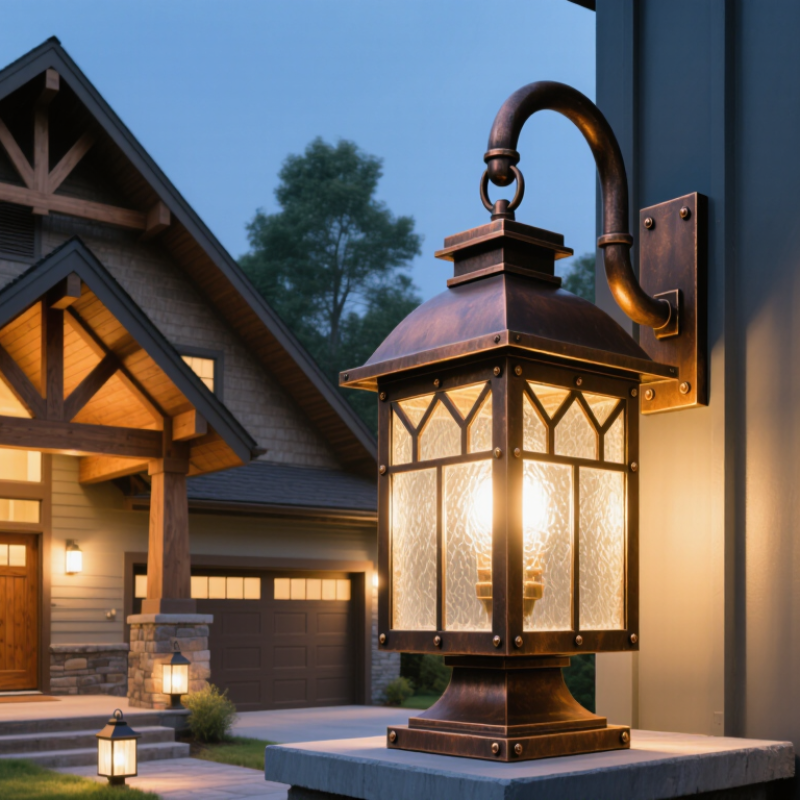
Craftsman style exterior lighting begins with honest, sturdy details. Look for lanterns with squared profiles, simple roof caps, and visible structural lines. Tapered brackets can echo porch columns and roof supports. These features create harmony instead of decoration for its own sake. Keep it grounded.
Materials matter as much as shape. Hand-finished metal, textured glass, and warm bronze or dark iron tones suit natural wood, stone, and painted siding. Clear glass gives sharper shadows, while seeded or opal glass softens glare. A 2700K to 3000K light source usually feels welcoming without appearing orange. I prefer downward illumination near doors and steps. It helps visitors read the surface safely.
Scale is easy to misjudge. A fixture beside a wide entry may need more visual weight than expected. Measure the door, trim, and mounting area before ordering. For exposed locations, verify the fixture’s outdoor rating and ask a qualified electrician to inspect connections. Moisture resistance is not optional. I once saw a beautiful lantern installed too high, making the porch feel strangely empty. The design looked correct on paper, but the actual proportions failed. That is worth remembering. Let the lighting support the architecture, not compete with it.
How to Choose Craftsman Style Exterior Lighting in 2026?
Craftsman lighting should support the home’s structure, not compete with it. Start by studying the roofline, porch columns, window grids, and entry proportions. A broad, low fixture suits a deep porch with heavy timber posts. A narrow lantern works better beside a compact doorway. Scale matters more than decoration. I once saw oversized lights overwhelm a modest bungalow. The installation looked expensive, yet strangely unbalanced.
Match the fixture finish to the exterior materials. Dark bronze or muted black can echo stained wood, charcoal shingles, and aged brick. Warm copper may complement natural cedar, but it changes color over time. That aging can look beautiful—or careless. Check a sample outdoors before choosing. Stone walls often need textured fixtures with simple frames, while smooth stucco benefits from cleaner silhouettes. Avoid mixing too many finishes around one entrance.
In 2026, warm LED lighting remains practical for Craftsman homes. Choose a color temperature near 2700K to preserve wood’s inviting tone. Use shielded designs when possible, especially near bedrooms or neighboring properties. The light should reveal steps, thresholds, and house numbers without shining into someone’s windows. Look closely at the mounting height. Even a well-designed fixture feels wrong when installed too high. Measure twice. Then question the first choice.
Match lighting fixtures to your home's architecture and materials with warm color temperatures that complement natural wood, brick, stone, and stucco.
Warm-white lighting between 2700K and 3000K generally supports the welcoming character of Craftsman homes. Use lower temperatures for warm wood and red brick, while slightly cooler warm-white light can preserve detail on gray stone and neutral stucco.
Choosing the right light source shapes both comfort and character. For Craftsman homes, warm LED bulbs usually suit wood, stone, and textured siding. They consume less energy and last longer than traditional incandescent bulbs. Look for a color rendering index of 80 or higher. Higher CRI helps porch colors appear more natural. I prefer 2700K to 3000K for entryways. These temperatures create a soft amber glow without making white walls look yellow.
Brightness should match the fixture’s purpose. A front-door sconce often needs 400 to 800 lumens. Path lights usually need only 100 to 300 lumens each. Too much brightness can flatten architectural details and disturb neighbors. It can also create harsh shadows under porch ceilings. I test fixtures after sunset, standing near the sidewalk and inside the doorway. The view changes quickly. A light that seems gentle indoors may feel glaring outside.
Use shielded fixtures when possible. Frosted or seeded glass can soften exposed points of light. Downward-directed beams improve visibility on steps and reduce skyward glare. Exterior fixtures should also resist rain and humidity, with a suitable outdoor protection rating. I once chose a brighter lamp for a narrow porch, believing it would feel safer. It looked cold instead. Lower brightness and warmer light worked better, although the first choice seemed reasonable. Consider dimming controls, but confirm that the bulb and control system are compatible.
Craftsman style lighting should look sturdy, not overly polished. Start with weather resistance. Check the fixture’s outdoor rating, sealed joints, corrosion-resistant finish, and protected wiring.
Coastal air, heavy rain, and winter salt can expose weak materials quickly. I once underestimated wind-driven rain under a covered porch.
The fixture stayed attractive, but moisture reached the socket. That mistake changed how I inspect installation details.
Energy efficiency matters beyond the bulb’s advertised lifespan. Choose efficient LED lamps with warm light, usually between 2700K and 3000K.
This range supports Craftsman wood tones without making the entryway look harsh. Compare actual brightness, not only wattage.
A small fixture with poor optics may need more power than expected. Dimming can reduce consumption, but only when the lamp and control are compatible.
Check the specifications carefully.
Smart controls add convenience, especially for pathways and side doors. Look for scheduling, motion detection, manual override, and local operation during internet outages.
A reliable system should still turn lights on when the network fails. Set motion lights thoughtfully; excessive sensitivity can disturb neighbors and waste energy.
I prefer warmer, lower-level illumination after midnight. It feels calmer.
Still, smart features can become frustrating when setup is unclear. Test every setting at night, in rain, and from the street before finalizing the installation.
How to Choose Craftsman Style Exterior Lighting in 2026?
Craftsman lighting should guide movement without overpowering wood, stone, or porch details. Start with a measured sketch of the entrance, steps, driveway, and walking paths. Place sconces near the door at comfortable eye level. Their light should reach the lock, house numbers, and nearby steps. My first layout looked balanced on paper, but it left one dark corner near the stairs. A nighttime test revealed the mistake.
Choose fixtures rated for outdoor exposure, with sealed joints and corrosion-resistant hardware. Use an approved junction box, weatherproof connections, and properly protected circuits. A qualified electrician should verify local requirements before installation. The U.S. Department of Energy reports that LEDs use at least 75% less energy and last up to 25 times longer than incandescent lighting. That matters when fixtures are mounted above a tall porch. Still, long life is not guaranteed when moisture enters the housing.
Tips: Follow DarkSky International’s Five Principles: useful, targeted, low-level, controlled, and warm-colored light. Aim beams downward, not toward windows or passing traffic. Clean glass twice yearly with a soft cloth. Inspect seals, screws, wiring, and mounting plates each season. Replace damaged components early. Timers and motion sensors can reduce wasted operation, but settings may need adjustment after winter. My own preference is slightly dimmer lighting; overly bright fixtures often make a Craftsman façade feel less welcoming.
Look for squared profiles, simple roof caps, and visible structural lines. Tapered brackets can echo porch columns. Keep the design grounded.
Hand-finished metal, textured glass, warm bronze, and dark iron usually work well. These materials complement wood, stone, brick, and painted siding. Avoid too many finishes near one entrance.
Clear glass creates sharper shadows and brighter visual detail. Seeded or opal glass softens glare. Choose based on comfort, not appearance alone.
A warm range around 2700K to 3000K usually suits Craftsman homes. It keeps wood tones inviting without looking overly orange. Warmer light feels calmer at night.
Measure the door, trim, porch, and mounting area before ordering. A wide entry may need more visual weight. Small homes can look overwhelmed by oversized fixtures.
Downward illumination near doors and steps helps visitors read the surface safely. Shielded designs can reduce glare into bedrooms and neighboring windows. Light should reveal details, not dominate them.
Confirm the outdoor rating, sealed joints, corrosion-resistant finishes, and protected wiring. Coastal air, rain, and winter salt can damage weak materials quickly. Moisture resistance is essential.
Scheduling, motion detection, and manual override can improve convenience. Choose controls that work during internet outages. Test them at night, in rain, and from the street.
Efficient warm LEDs and compatible dimming controls can lower consumption. Compare actual brightness, not wattage alone. A small fixture may still perform poorly.
Do not assume the first mounting height is correct. A lantern installed too high can make a porch feel strangely empty. Measure twice, then question the choice.
Choosing Craftsman Style Exterior Lighting in 2026 begins with understanding its defining qualities: sturdy construction, handcrafted character, balanced proportions, and simple decorative details. Select fixtures that complement your home’s architecture, siding, brick, wood, stone, and trim rather than competing with them. Consider lanterns, sconces, pendant lights, and path lighting that create a consistent visual language while adding warmth and practical illumination.
The right light source should provide comfortable brightness and a warm-to-neutral color temperature suitable for entrances, porches, walkways, and outdoor living areas. Prioritize weather-resistant materials, sealed electrical components, energy-efficient bulbs, and smart controls that allow scheduling, dimming, and motion-based operation. Careful placement can improve safety and curb appeal without producing harsh glare or disturbing nearby spaces. Finally, plan professional installation where needed and establish a maintenance routine that includes cleaning lenses, checking mounting hardware, inspecting wiring, and replacing aging components so your Craftsman Style Exterior Lighting remains attractive, efficient, and dependable for years.