
Explore top-tier commercial-grade luminaire solutions specified for luxury hospitality, high-end retail, executive corporate hubs, and architectural heritage projects worldwide. Custom sizing, UL-certified components, and hand-applied finishes available.
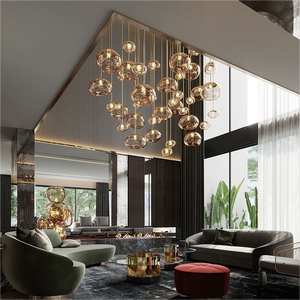
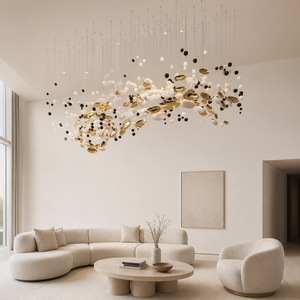
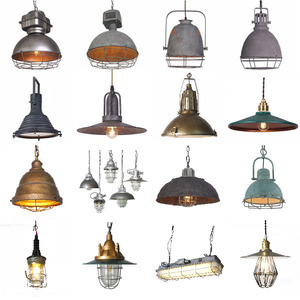
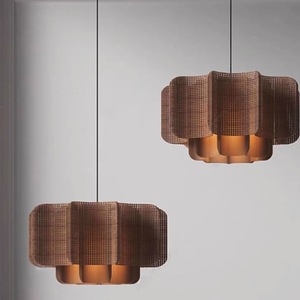
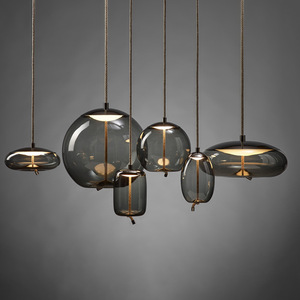
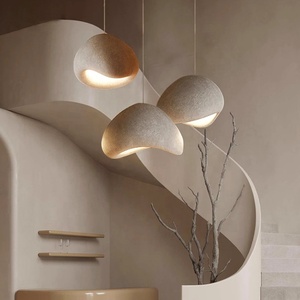
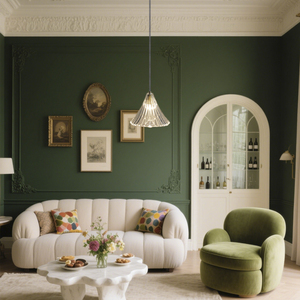
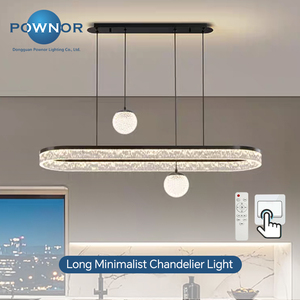
In large-scale commercial real estate, luxury hospitality developments, and municipal architectural restorations, selecting a commercial lighting manufacturer is a capital-critical decision. Today’s architectural specifiers, Engineering-Procurement-Construction (EPC) directors, and interior designers demand far more than aesthetic alignment—they require strictly verified photometrics, rigorous structural engineering, environmental resilience, and total supply-chain transparency.
According to Google Search Quality Rater Guidelines and semantic search data, professional buyers searching for "Top 10 Commercial Lighting Manufacturers & Factory" are seeking actionable technical evaluations rather than high-level commercial pitches. This whitepaper delivers verified technical metrics, critical manufacturing audit criteria, and deep material analysis to ensure your procurement strategy minimizes long-term operational expenditure (OpEx) while maximizing architectural value.
When shortlisting global commercial lighting suppliers, procurement teams must evaluate manufacturers across four foundational engineering pillars:
Tier-1 commercial factories utilize heavy-gauge solid brass, architectural-grade bronze, unlacquered copper, and authentic quarried alabaster stone. Low-tier manufacturers compromise on durability by utilizing die-cast zinc alloys or plated cold-rolled steel, which deteriorate under humid, coastal, or high-traffic commercial environments.
Commercial-grade luminaires require custom optical distribution, high Color Rendering Index (CRI > 95, R9 > 80), strict MacAdam Ellipse color consistency (SDCM < 3), and Unified Glare Ratings (UGR < 19). Passive heatsinking engineered from cold-forged aluminum or solid brass prevents thermal degradation, preserving LED chip lifespans beyond 50,000 hours.
Direct factory procurement must guarantee compliance with regional safety codes, including North American UL 1598 / CSA C22.2, European CE/RoHS, and International IEC 60598 standards. Damp and Wet Location ratings (IP65/IP67) are mandatory for outdoor perimeter lanterns, high-ceiling foyers, and marine climate projects.
True commercial lighting leadership stems from a synthesis of heritage handcrafting and modern precision engineering. Rooted in traditional metal-spinning, precision hand-soldering, and custom patination, leading factories deliver custom sizing to the exact inch—eliminating costly field improvisations during installation.
A primary failure point in commercial interior specification is substituting genuine natural alabaster stone with faux resin translucent panels. Authentic alabaster is a naturally occurring gypsum mineral quarried from select veins. When illuminated, natural stone exhibits multi-dimensional depth, subtle veining, and a soft, warm diffusion that synthetic polymers cannot replicate. Furthermore, resin discolors under ultraviolet (UV) exposure and LED thermal output, whereas natural alabaster maintains its physical and optical integrity indefinitely.
Consult an Engineering SpecialistFor custom architectural contracts, our manufacturing partner protocol ensures every fixture undergoes rigorous pre-shipment quality control:
To streamline architectural RFP (Request for Proposal) reviews, the following comparison matrix outlines standard commercial specs vs. premium custom engineering standards:
| Evaluation Parameter | Standard Commercial Grade | Bespoke Architectural Grade (Tier-1 Enterprise) |
|---|---|---|
| Primary Structural Material | Plated Sheet Steel / Die-Cast Zinc Alloy | Solid Brass, Cast Bronze, Heavy Copper & Genuine Alabaster |
| Color Consistency & CRI | SDCM < 5, CRI > 80 | SDCM < 3 (MacAdam 3-Step), CRI > 95, R9 > 85 |
| Corrosion Resistance | Powder-coated steel (Prone to edge rust) | Solid non-ferrous metals (Salt spray resistance > 1,000 hrs) |
| Dimming & Smart Controls | Basic Triac / Phase Dimming | DALI-2, 0-10V, Casambi Mesh, Zigbee 3.0 & Matter Native |
| Customization Capability | Fixed catalog dimensions only | Fully custom drop lengths, backplates, arms & custom glass cut to inch |
| Safety & Compliance | Basic CE self-declaration | UL 1598, CSA, CE, RoHS, Damp & Wet Location Listed |
As commercial real estate transitions toward intelligent, sustainable, and wellness-centric building designs, commercial lighting procurement is evolving rapidly. Forward-thinking specifiers must align with factories actively investing in the following four mega-trends:
Modern commercial workspaces, healthcare facilities, and luxury hotels are prioritizing circadin-aligned illumination. Advanced commercial factories now integrate multi-channel LED engines capable of smooth 1800K–6500K tunable white transitions. By mimicking daylight cycles, HCL enhances occupant productivity, sleep quality, and psychological well-being.
The era of complex, dedicated control wiring is giving way to wireless mesh protocols. Leading manufacturers incorporate miniature Casambi, Matter, or D4i enabled wireless drivers inside decorative and technical fixture canopy housings. This enables per-fixture granularity, occupancy sensing, automated daylight harvesting, and energy consumption telemetry directly accessible via central Building Management Systems (BMS).
With ESG (Environmental, Social, and Governance) mandates governing commercial real estate investments, lighting manufacturers are evaluated on life-cycle embodied carbon. Solid brass and bronze luminaires excel in circular economy models because raw metals are 100% recyclable, and modular mechanical construction allows components to be upgraded over decades rather than discarded into landfills.
Open-ceiling office designs, restaurant spaces, and hotel lobbies often suffer from acoustic reverberation. The convergence of decorative ambient pendant lights with sound-absorbing acoustic felts (PET recycled acoustic materials) and natural stone diffusers allows architects to solve acoustic dampening and photometric distribution in a single unified ceiling installation.
Consult with our senior lighting specification engineers for custom photometric calculations, shop drawings, finish samples, and direct B2B factory pricing.
Send an Inquiry