In global B2B architectural procurement, selecting a verified OEM/ODM project lighting manufacturer requires examining structural engineering capability, material purity, and compliance scalability. Unlike mass-market consumer lighting suppliers who rely on thin zinc-plated sheet metal and molded faux-resins, elite project lighting exporters maintain strict artisan craftsmanship combined with industrial-grade precision machining.
Our manufacturing facility operates under the founding principle established in our historical workshops since 1974: light fixtures must be built as permanent architectural elements rather than disposable interior decorations. Every custom chandelier, pendant array, and exterior lantern undergoes strict metallurgy verification. We utilize solid C36000 brass, structural bronze, high-grade copper, and hand-cut quarried alabaster stone. This ensures zero structural degradation, absolute resistance to coastal oxidation, and heirloom-quality thermal management for modern solid-state LED systems.
Solid Brass & Alloy Metallurgy
Heavy-gauge unlacquered, antiqued, or patinated solid brass chassis. Never plated zinc or mild steel. Built to withstand high ambient humidity and marine environments without rusting through.
Bespoke Sizing To The Inch
Eliminate site-cut improvisation. All stem lengths, ceiling backplates, arm projections, and glass modules are fabricated precisely to your architectural BIM/CAD elevation drawings.
Genuine Quarried Alabaster
Sub-surface illuminated translucent alabaster stone hand-sculpted directly from quarry blocks. Each panel features distinct mineral veining, scattering light without glare.
“Architectural lighting specification is fundamental to space volume definition. When a luxury hotel lobby demands a 15-foot multi-tier chandelier, structural deflection, load-bearing canopy safety, thermal LED sinking, and exact photometric color rendering (CRI > 95) are non-negotiable engineering requirements.”
2. Future Procurement Trends in Global Commercial & Project Lighting (2025–2030)
As commercial real estate, luxury hospitality chains, and high-end residential developments evolve, global procurement managers face new operational and aesthetic demands. Semantic search analysis of international architectural tenders reveals four decisive structural shifts in lighting procurement:
A. Smart IoT Integration & Wireless Protocol Standardisation
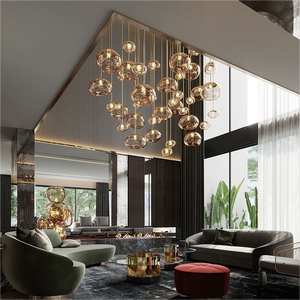
Modern project specifiers are moving away from legacy static dimming systems towards integrated IoT ecosystems. High-ceiling chandeliers and large-scale architectural light networks now routinely integrate Tuya, Zigbee, DALI-2, and APP-controlled Bluetooth Mesh drivers directly inside the canopy housing. The ANNO APP Control Luxury Glass Ball Pendant Light exemplifies this shift, allowing facility managers to tune CCT (Correlated Color Temperature from 2200K to 6000K), adjust lumen density, and configure automated scenes directly from central management interfaces without installing complex supplementary control wiring.
B. Circular Design & Field-Serviceable Modular Assemblies
Sustainability mandates across North America, Europe, and the Middle East now enforce Right-to-Repair principles in commercial lighting installations. Procurement teams increasingly reject sealed, non-serviceable LED fixtures that require total disposal upon driver failure. Modern engineering standards demand modular driver bays, standardized E27/GU10 or field-replaceable LED light engines, and accessible wiring channels. This modularity extends the operational lifecycle of hotel and public venue fixtures to decades, dramatically lowering the total cost of ownership (TCO).
C. Biophilic & Organic Material Fusion
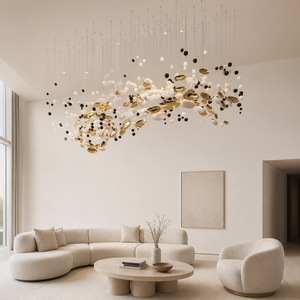
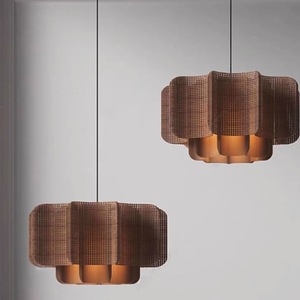
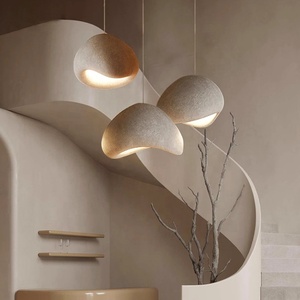
There is a massive surge in demand for organic, tactile materials that balance modern minimalist architecture. The introduction of hand-woven rattan, natural stone cloud elements, and Wabi-Sabi aesthetic geometry—as highlighted in our Japanese Wabi-Sabi Creative Cloud Stone Pendant series—bridges the gap between technical illumination and Zen-inspired biophilic interior architecture. Designers use these natural textures to soften harsh minimalist concrete and glass environments.
D. Marine-Grade Corrosion Protection & Living Finishes
For seaside resort projects, oceanfront villas, and outdoor hospitality spaces, material degradation due to salt air exposure is a continuous liability. Future procurement guidelines mandate solid brass, copper, and bronze construction with hand-applied patinas. Unlike synthetic powder coatings that bubble and peel under coastal salt mist, solid brass fixtures form a protective, elegant living patina that gracefully weathers over time without structural decay.
3. Material Innovation & Architectural Manufacturing Trends
Understanding material physics is essential for specifiers balancing aesthetic intent with rigorous commercial building codes. Below is an engineering comparison matrix evaluating traditional commercial lighting materials against enterprise-grade custom manufacturing standards:
Engineering Attribute
Standard Commercial / Mass-Market Fixtures
Enterprise Custom Project Manufacturing
Architectural Benefit
Primary Structural Chassis
Electroplated zinc alloy, mild stamped steel
C36000 Solid Brass, Cast Bronze, Heavy Copper
Zero rust, lifetime structural integrity, coastal resilience
Flicker-free dimming down to 0.1%, global code compliance
Dimensional Customization
Fixed catalog dimensions only
Bespoke stem drop, canopy pitch, and array scale
Perfect site integration for high ceilings and stairwells
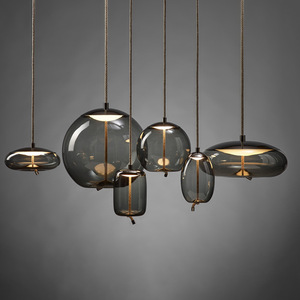
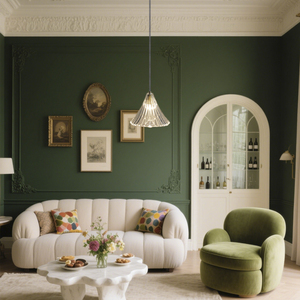
Material innovation in glass blowing and optical texturing has also unlocked new possibilities for hospitality projects. By utilizing smoke gray tinting, hand-leaded geometric panels, and seeded crystal techniques, custom chandeliers transform harsh LED light sources into soft, multi-dimensional ambient layers that elevate guest experience in dining halls and lounge spaces.
4. Technical Application Guide for Project Lighting Specifiers
Selecting the optimal fixture topology for commercial spaces requires matching spatial volume with proper photometric distribution. Below is our engineering recommendation guide for key architectural spaces:
High Ceiling Atriums & Staircases
Recommended Solution: Multi-Tier Glass Ball & Custom LED Spiral Chandeliers (e.g., ANNO APP Control Series).
Design Consideration: High-drop voids require vertical rhythm and multi-directional beam spread. Utilize smart APP or DALI dimming to adjust light levels for daytime sunlight vs. night ambiance.
Hotel Lobbies & Grand Reception Desks
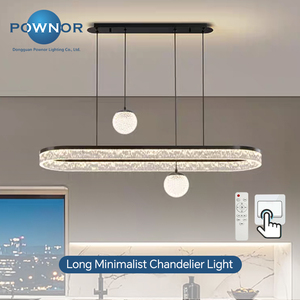
Recommended Solution: Modern Custom Glass LED Chandeliers & Rectangle Acrylic Cloche Arrays.
Design Consideration: Reception zones serve as primary visual anchors. High color rendering (CRI > 95, R9 > 80) ensures warm skin tones and true material texture representation.
Design Consideration: Low-glare, intimate task lighting focused directly over tables and bars creates atmospheric warmth while maintaining visual comfort for extended dining.
5. Frequently Asked Questions (FAQ) for Global Lighting Buyers & Specifiers
Addressing core technical, financial, and logistical queries from international architectural firms, MEP contractors, and commercial importers.
Where are your project lighting fixtures manufactured, and how is quality controlled?
Every custom fixture is designed, engineered, and assembled under rigorous quality control in our dedicated manufacturing facilities. Metal spinning, CNC precision machining, hand soldering, glass fitting, chemical patination, and final electrical testing are performed under one roof. Every completed order undergoes 100% full-voltage burn-in testing and dielectric voltage-withstand inspection before export packaging.
Can fixtures be customized to exact ceiling heights and international voltage standards?
Yes. We manufacture to exact project specifications down to the inch. Overall drop lengths, canopy mounting plates, stem extensions, and arm projections are customized based on your CAD elevation drawings. Furthermore, all internal wiring and driver components are configured for global compatibility, supporting 110V–130V (North America) and 220V–240V (EU/UK/Asia/Middle East) operating environments with UL, CE, RoHS, and SAA certifications.
Is the alabaster used in your chandeliers genuine natural stone or synthetic resin?
We exclusively use 100% genuine quarried natural alabaster stone. We never use synthetic resin or molded plastic imitations. Because natural alabaster is a mineral stone, each shade and panel possesses unique organic veining, varying opacity, and rich depth. When illuminated, genuine alabaster diffuses light with a soft, warm glow that synthetic materials cannot replicate.
How do your solid brass outdoor and indoor fixtures perform in coastal environments?
Our exterior lanterns and interior fixtures are fabricated from solid brass, heavy-gauge bronze, or pure copper rather than plated steel or aluminum. They will not rust or corrode. In coastal or high-salinity air environments, solid brass naturally develops a protective, distinguished patina. For projects requiring consistent metal tones across multiple units, we provide stable, sealed marine-grade protective clear coats upon request.
What is the typical lead time for custom enterprise project orders and prototyping?
Standard production lead times for custom project orders range from 3 to 5 weeks depending on order volume and structural complexity. Fast-track prototyping for mock-up rooms is available within 10 to 14 days. We work closely with international freight forwarders to provide air-freight, sea-freight, and door-to-door DDP logistics with custom reinforced plywood crate packaging to guarantee zero breakage during transit.
Do you provide technical documentation, BIM/Revit models, and trade discounts for architects?
Yes. Our Architectural Trade Support team provides specifiers with full 3D CAD models, BIM/Revit files, detailed photometrics (IES files), spec sheets, and physical material finish samples (brass swatches and alabaster chips). Commercial specifiers, hotel interior designers, and global lighting contractors receive tiered wholesale project pricing and dedicated engineering support throughout the submittal process.
Partnering with a specialized lighting exporter ensures seamless integration from conceptual design to site installation. Our project execution model follows a streamlined 4-step engineering pipeline:
Step 1: Specification Review
Submit your site plans, CAD elevations, or design concepts. Our engineering desk analyzes structural mounting requirements, voltage parameters, and photometric targets.
Step 2: CAD Shop Drawings
We generate detailed 2D/3D shop drawings showing exact dimensions, joint connections, canopy details, and electrical driver specifications for sign-off.
Step 3: Precision Fabrication
Master artisans spin metal, cut glass, carve natural alabaster, and apply chemical patinas. Mid-production photos and test reports are provided for quality assurance.
Step 4: Certified Testing & Export
Fixtures undergo electrical safety testing, are packed in heavy-duty export crates, and shipped with complete installation guides and replacement component kits.
Access full product specifications, photometrics (IES files), material finish swatches, and factory-direct OEM pricing for your upcoming commercial or residential development.