
Technical Whitepaper: OEM Garden Lighting Engineering for the Doha Market
“In Qatar’s hyper-arid, coastal marine climate, exterior architectural lighting is not merely a decorative element—it is an environmental endurance test. Luminaires deployed in Doha must withstand surface temperatures exceeding 70°C, airborne fine silica sand particulates, and extreme coastal salinity while adhering strictly to Qatar National Vision 2030 sustainability benchmarks.”
1. The GCC Environmental Challenge & Microclimate Physics in Qatar
The State of Qatar presents one of the most demanding environmental operating conditions globally for outdoor solid-state lighting (SSL) systems. Specifiers, landscape architects, and electrical engineering contractors operating in Doha face three catastrophic environmental degradation vectors:
Extreme Thermal Accumulation
During summer months in Doha, ambient air temperatures frequently surpass 48°C to 52°C. Ground-level solar radiation can elevate metal housing surface temperatures of garden lights to over 75°C. Without advanced thermal dissipation pathways, standard LED junction temperatures ($T_j$) rapidly exceed $105^\circ\text{C}$, leading to immediate luminous flux degradation, color shifting (chromaticity drift), and premature driver capacitor failure.
Fine Silica Sand Ingress & Haboob Storms
Doha experiences seasonal dust storms (Haboobs) carrying particulate matter as small as PM2.5 to PM10 silica dust. These micro-particles act as an abrasive medium against optical lenses and penetrate standard gaskets, causing internal optical degradation and electrical short-circuiting if seals lack certified IP65/IP68 particulate barriers.
High Atmospheric Humidity & Coastal Salinity
With developments concentrated along the Persian Gulf coast (such as Pearl-Qatar, Lusail Marina, and Corniche Promenade), outdoor luminaires operate in continuous salt spray conditions. The combination of high atmospheric moisture and sodium chloride accelerates galvanic corrosion in inferior aluminum alloys and standard carbon steel fasteners.
2. Sustainability Mandates: GSAS, Kahramaa, and Qatar National Vision 2030
Under the framework of Qatar National Vision 2030, real estate developments managed by entities like Qatari Diar, United Development Company (UDC), and Ashghal (Public Works Authority) strictly enforce the Global Sustainability Assessment System (GSAS). Garden lighting procurement must comply with stringent energy efficiency standards:
- Efficacy Thresholds: Outdoor LED system efficacy must exceed 120 lm/W for AC grid-connected fixtures and 160 lm/W for standalone solar PV bollards.
- Light Pollution Control (IDA Dark-Sky Compliance): Strict optical cut-off angles (Type I through Type V light distribution) are mandated to prevent upward skyglow and light trespass into adjacent marine or residential habitats across West Bay and Katara Cultural Village.
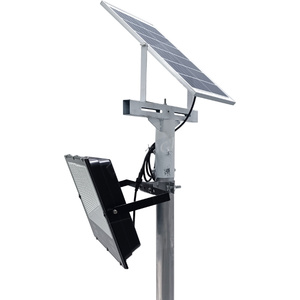
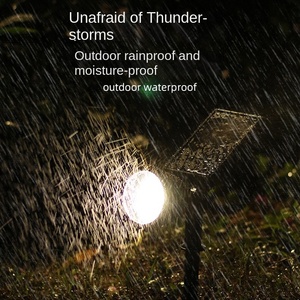
- Solar PV Integration: Integration of high-efficiency monocrystalline solar panels with long-lifecycle $LiFePO_4$ (Lithium Iron Phosphate) batteries capable of operating at sustained $60^\circ\text{C}$ internal ambient temperatures without thermal runaway risk.